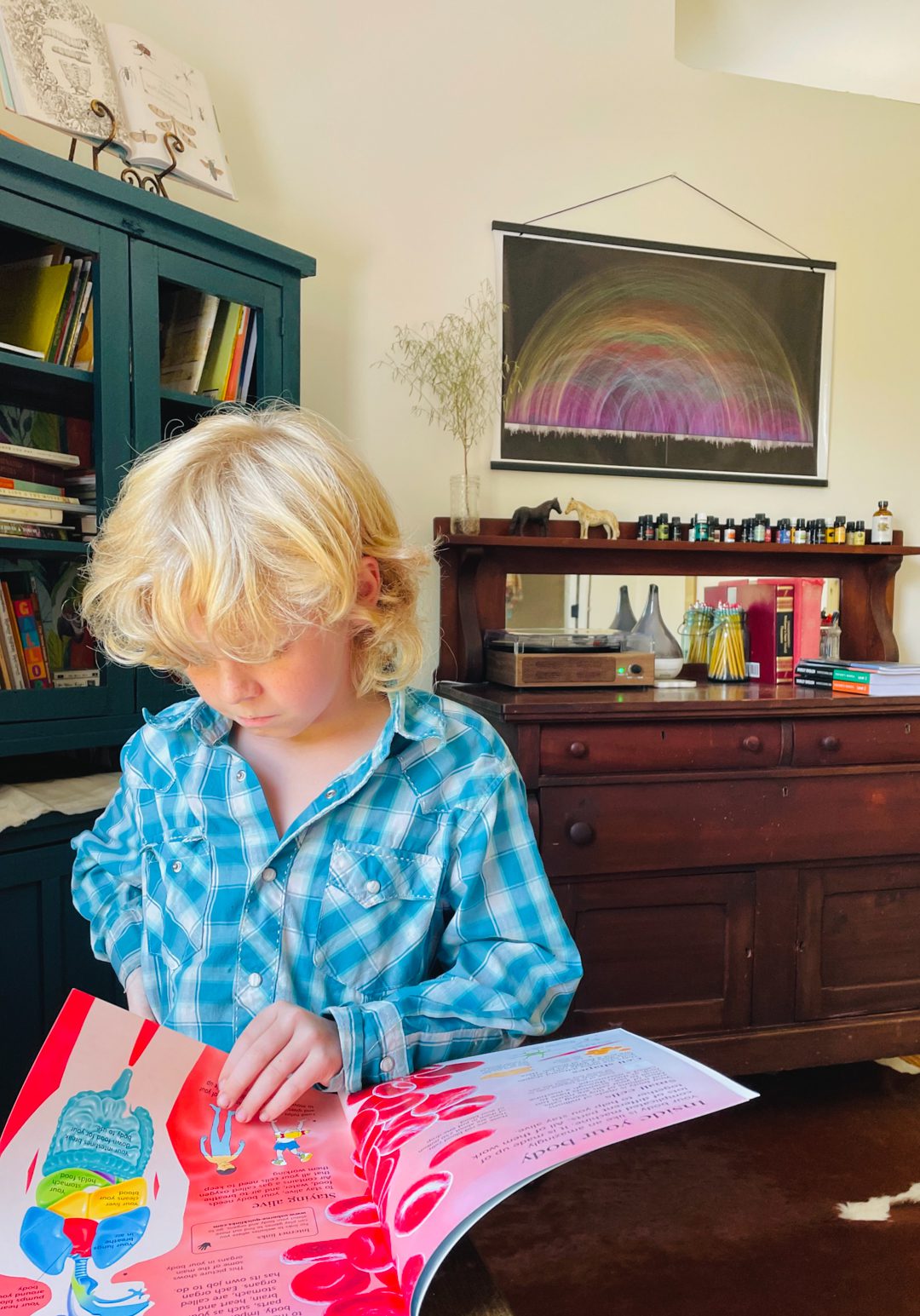
The day I sat in a meeting with the assistant principal of my son’s elementary school and listened to her present me with the data pertaining to his mandatory third grade retention, was the day I accepted my fate as a homeschool mom.
Her charts, test scores, spreadsheets and concerned facial expressions gently expounded upon his inadequacies. It was out of her hands. It was state law. Her voice was gentle and persuasive as she nodded for me to nod. The fish tank on the faux wood shelf behind her felt like an onlooking auditor. The industrial carpet looked tired. The table was large. The papers were many.
I had wanted to homeschool. I had tried. I had failed.
I tackled homeschooling with flippant optimism back in Judge’s kindergarten year, after he attended a year of pre-school.
It couldn’t have gone worse.
Even after months, he stared at the flashcards like they were blank pages. We couldn’t get past “was” and “saw”. He routinely wrote his name in perfect mirror image. I would explain the sounds of letters, yet again, and his eyes would gloss over and I knew he wasn’t listening, much less understanding, and I knew he didn’t understand why I was so adamant about this routine torture. Why the spiral bound book of tyranny? Why the little papers of confusion? Why the angry, exasperated mom?
After a full year of this, I concluded that I was a failure, homeschooling was a fantasy and it wasn’t in the cards for us. I dug a hole in my mind and threw my convictions and my dreams in it like a dead dog that had been hit by a truck. I buried it with sadness and resentment.
Maybe he needs the encouragement of the other children learning alongside him. Maybe he needs to be instructed by someone other than his mother. Maybe he needs someone who isn’t distracted with two toddler siblings. Maybe he needs more structure. Maybe I just suck at this.
We weren’t able to get him into the christian school, so I enrolled him in our local, well-rated, well-run public school.
And to be honest, I quit.
I abdicated his education.
I was still picking at the stale cake left over from my own pity party. Obviously I am no good at teaching my kids, I’ll just leave it to them. I resented their confidence, their sense of ownership and authority and competence over the matter. I maintained a prickly attitude toward the over-lording school as an impersonal institution, and toward his kind, well-meaning teacher as an extension of that institution.
And after a few parent-teacher meetings, all telling me what I already knew about his struggles, he ended his first grade career pre-maturely due to the covid pandemic. All threats of “retention” were curtly forgotten and all students were basically released to their parents at spring break and given a “free pass” until August, and we’d cross that bridge when we got there.
But I knew he couldn’t read. I knew he would struggle as soon as August came. I knew I couldn’t help him (or so I told myself). So I contacted the kindergarten teacher of the christian school. Maybe she could fill in this gap. Maybe if he’d of been in her class instead of home with me, this wouldn’t be the case. Maybe she can fix this mess.
I hired her to tutor Judge through that long summer. She told me all of the same things his first grade teacher told me. She suggested all the same tactics. More reading at home, more flashcards, more practice.
And while I did see some faint signs of improvement, I knew second grade was going to hit like a train.
I successfully secured a spot at the christian school for his second grade year, which was a dream come true because that meant all three of my children could be there for the first time ever; all three at one location, after six years of intense schedule juggling. I also felt better about Judge’s education, assuming the smaller, more intimate atmosphere would afford him some special attention where he needed it.
Just days before school started, I received an email from the school. They were placing him in first grade. Again. “He just isn’t ready. He will struggle. It’s for the best.” they explained.
Now, this might have been perfectly fine if Judge was a different kind of kid, or if he weren’t the oldest of his cousins, who were also his schoolmates. I knew this would not bade well for him socially or emotionally. I knew he’d be less interested than before. I knew it’d be something that would follow us through the years. (The exact same thing had happened to his dad, my husband, for nearly the same reason, and it was not, in fact, for the best.)
This might have also been okay if I didn’t feel undermined. The only way they could have known he “wasn’t ready” was by way of an informant, perhaps a certain tutor?
Again I stood in the “we know better” shadow. They were confident, competent and in wholly charge of my son’s education.
So, I took my toys and left. Back to public school we went with two out of three kids. Back to the daunting and constricting drop-off and pick-up schedule for multiple children on multiple campuses, which required me to live in a sort of whack-a-mole state of mind and required much of my three young children as well.
Second grade went as expected; a long slow struggle punctuated with parent-teacher meetings and colored with the dread of retention. Against my will, I enrolled him in summer school to try to catch up. He patiently and mournfully endured.
This had become a way of life by third grade. I think he and I both became desensitized by the warnings. We excused. Justified. Forgot. Avoided.
And now at the end of the year, I sat in a meeting room off the front office of the school. I asked about IEP testing, and other possible resources or intervention for kids that struggle in this way. “Unfortunately we don’t have access to any of those resources at this time.” was the answer.
I pressed, “He is so smart, gifted even, in other areas, but he’s handicapped in every subject without the ability to read well. We’ve tried everything. He needs some other kind of help. It’s not fair to hold back the whole child and punish him socially when he clearly has a very specific problem…” I begged.
Summer school was put on the table. “We can retest him after summer school and if he meets state standards by then we can promote him to fourth grade.” she explained. I knew in my guts he wouldn’t pass, and I couldn’t imagine looking him in the eye and telling him he’d spend yet another summer in school. She continued, “But he will still struggle. Just let him try again, give him time, there is no rush to grow up.” she comforted.
I understood what she meant, and I appreciated her concern for him, but I could see that all I would find at school was more of the same. Without a professional, specific, therapeutic intervention, we would never get off this ride. And it would cost him time, put him a grade behind his closest friends and cousins and damage what little enthusiasm was left for learning.
I agreed to retain him, saying all the things out loud that she wanted to hear, and watched her relieved response pour forth as she organized papers and proceeded with the meeting. I watched but I wasn’t listening. I knew I would pull him from school, and we would homeschool. And that was that.
I thanked her for all of her efforts. I left the school on good terms. I went home to print and file the necessary withdrawal forms with the school board. There was simply nothing there for me. No one could help us. I had to figure this out if I wanted anything different for my son.
(Of course, there was help. There were professional therapist, programs and diagnostic work that could have intervened long before this point… but I didn’t know that then. Only after all of this did I realize the help that really was at my fingertips all along. And if you are reading this, and you are where I was, please do more research than I did. I asked the schools for help and when they had nothing to offer, I gave up. Don’t.)
After getting the “go-ahead” from Justin, I withdrew all three of our children.
I drowned myself in encouraging -threatening even- voices on the subject and ordered curriculum, spending more money than I could hardly believe. I read Charlotte Mason, I listened to Dr. Greg Bahnsen’s lectures, I watched youtube, I talked with homeschooling friends and, thanks to one of those friends, I attended a homeschooling convention. (Talk about culture shock!)
I was terrified.
But quotes like this one from Mason were goads of encouragement:
“Let me repeat, that I venture to suggest, not what is practicable in any household, but what seems to me absolutely best for the children; and that, in the faith that mothers work wonders once they are convinced that wonders are demanded of them.”
-Charlotte Mason
And I clung to the promises …
“But he said to me, ‘My grace is sufficient for you, for my power is made perfect in weakness.’ Therefore I will boast all the more gladly of my weaknesses, so that the power of Christ may rest upon me.”
2 Corinthians 12:9
I had prudence enough to start Judge over in third grade, retaining on my own terms, because I suspected the curriculum would be rigorous and I knew struggling with the material on top of all of the changes we were making would be foolish. And I nervously told myself, we can always move up. We can advance as soon as he’s ready.
One could argue that if I had just retained him in the first place, he’d have been fine.
And while I can’t disprove that, I can say that I honestly believe there were a few main elements that lead to his change of mind, heart and brain which allowed him to learn to read:
- The environment was peaceful yet thorough … resulting in dignity and accountability
- The material was compelling and relevant … resulting in desire and interest
It was like a seed that took. It was like it had lain dormant all that time, and the these conditions finally fostered the growth.
Desire to grasp, know, find out the material pulled him into trying, rather than pushing. The books pulled him out of his complacent, abject disregard.
For example, my husband noticed his interest in the photos of a book on classic tractors. Judge would bring it to him and ask questions, and Justin would say, “read it!” and he would help him read it, word by word. Then he drug my Grandaddy’s old, rusty 1950’s Ford tractor home and gave Judge something to “work on”, something to read about, something to want to know. Judge would go outside and look at all the parts and compare them to the photos and try desperately to find the information he was looking for in the book.
(Yes, we could have brought the tractor home and read the book with him long before this, and we should have. But the decision to take our kids education entirely into our own hands was such a terrifying task that it thrust us into this sort of action. It is possible that this sort of fervency on the part of parents could cure a kid no matter where they’re enrolled. But it’s hard to keep a finger on the pulse of their learning when you’re not doing it with them day in and day out. )
But unlike the movie Rocky, that first year did not pass by like a montage of intense yet edifying scenes set to upbeat music.
It was more like watching grass grow.
We cried a lot that first year.
A lot of expectations had to go out the window. So many times I asked Justin if we made the right choice.
But year two was a little better.
And in year three we could feel a little wind in our hair.
That fourth year was a blur.
And now we are now facing down the commencement of our fifth year, to my disbelief!
And I can report that all my kids read, but Judge READS. This kid reads Tolkien, Lewis, Twain, Wyss, Defoe, London, George and more.
Don’t get me wrong, I still struggle with children who don’t want to do their math, who bicker on Mondays, complain about latin and get distracted easily… but they are thriving. They are learning. They are growing more and more independent. They are taking charge of their time. They are asking questions. They pick up books willingly. They talk to each other about books. They talk to strangers at the taco food truck about books. They love stories. They love learning. They love their freedom.
And I can say, after these past four years of homeschooling, Judge took his national norm reference test and he placed back into the grade he should be in, as if the retention never happened. He’s back on track. Ahead, actually. Praise God.
In Retrospect
I look back with regret for the way I gave up on homeschooling the first time. The way I pushed Judge to perform “this or that” by a certain deadline. The way I abdicated rather than coming along side teachers who were there to help. The way I declined to search harder for help outside of the school systems. I regret pushing him into tutoring and summer school, he was so little.
But I recognize that my character wasn’t able to do the work of homeschooling at that time. And that it took this process to get me there.
“And we know that for those who love God all things work together for good, for those who are called according to his purpose.”
Romans 8:28
I encourage you, if you are going through some version of what I went though, to do whatever it takes to serve your children well.
Lay down whatever it takes, go uphill, against the grain, backwards or change lanes. Ask questions. Pursue. Push. Try. You are their only mother, and you and their dad are the barrier God put in place between them and the world. They will go into the world one day, but now is the time to prepare them for that day. Be diligent. And, as we women are especially good at, be impossibly stubborn. Be bull-headed for their good, even at your own expense.
-Courtney
Leave a Reply
You must be logged in to post a comment.